 EN
Entering the Robot Vacuum Market
2026/11/06
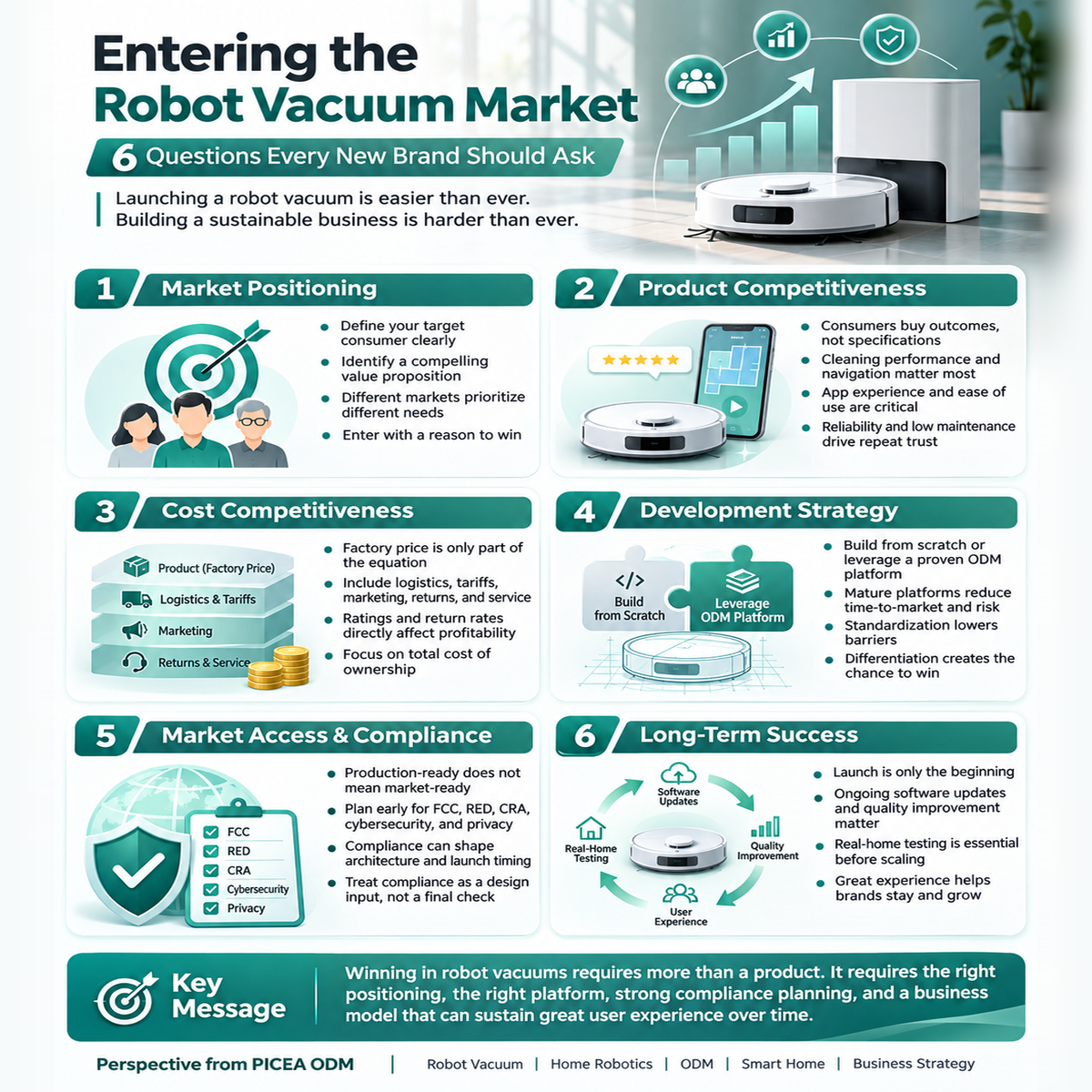
Planning a robot vacuum launch? PICEA Robotics covers six key decisions on positioning, user experience, costs, ODM development, compliance, and support.

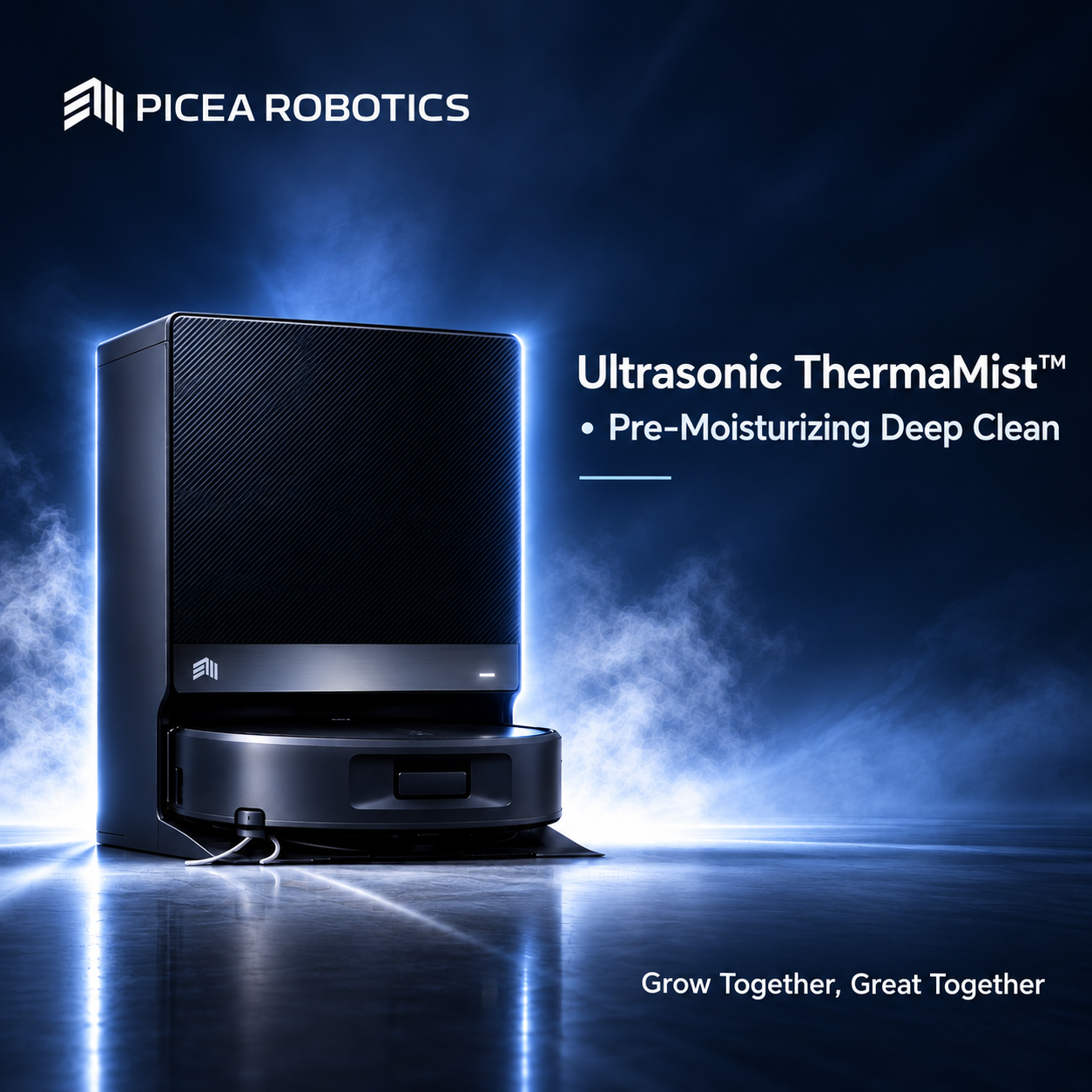
Robot vacuum technology has advanced rapidly in recent years. From LiDAR navigation and AI obstacle avoidance to increasingly powerful suction systems and fully automated docking stations, modern robot vacuums are becoming more intelligent and capable.
However, as these technologies mature, another area is gaining importance: mopping performance.
Traditional mopping systems have improved significantly, but maintaining mop cleanliness throughout a cleaning cycle remains an important engineering challenge.
Freshwater roller mopping technology offers a different approach by combining active floor scrubbing with continuous mop cleaning and wastewater management.
For brands developing their next generation of robot vacuum cleaners, this technology represents an important opportunity for product differentiation.
Freshwater roller mopping is an advanced robotic cleaning system designed to continuously supply clean water to a rotating roller mop while removing dirt and wastewater during operation.
Unlike conventional mop pads that gradually accumulate dirt between washing cycles, freshwater roller systems are designed to refresh the cleaning surface while the robot is working.
The basic cleaning process involves five stages:
Fresh Water Supply: Clean water is delivered to the roller.
Active Scrubbing: The rotating roller contacts the floor and removes dirt.
Dirt Separation: A scraper removes contaminated water and debris from the roller.
Wastewater Recovery: Dirty water is collected separately.
Continuous Cleaning: The refreshed roller continues cleaning the floor.
This creates a more continuous cleaning process, helping reduce the transfer of dirt between different floor areas.
The main innovation is not simply the rotating roller itself, but the integration of fresh-water distribution, active scrubbing and wastewater recovery into one cleaning system.
One limitation of many traditional mopping systems is that the mop becomes progressively dirtier during operation.
Although advanced docking stations can wash mop pads automatically, cleaning often happens at intervals when the robot returns to its station.
Freshwater roller mopping addresses this challenge by refreshing the roller during floor cleaning.
This helps maintain a cleaner contact surface and reduces dependence on periodic dock washing.
Cleaning a large floor area requires more than strong scrubbing performance at the beginning of a cleaning cycle.
Maintaining consistent cleaning conditions throughout the route is equally important.
By continuously managing water supply and wastewater removal, roller mopping systems can help reduce the buildup of contamination on the cleaning surface.
This is particularly relevant for kitchens, dining areas and other spaces where wet stains and everyday dirt are common.
Unlike passive flat mops, roller systems use motor-driven rotation to create mechanical scrubbing action.
Cleaning effectiveness depends on several factors, including roller material, rotation speed, contact pressure and water distribution.
When these elements are properly integrated, roller mopping can provide effective cleaning for footprints, dried spills and other common household stains.
Dual rotary mopping remains one of the most established cleaning solutions in premium robot vacuums.
Its two rotating mop pads provide effective scrubbing, while automated docking stations support periodic mop washing and drying.
Freshwater roller mopping takes a different approach.
| Feature | Dual Rotary Mop | Freshwater Roller Mop |
|---|---|---|
| Cleaning Motion | Rotating mop pads | Rotating roller |
| Mop Cleaning | Typically periodic | Can be continuous |
| Fresh Water Supply | Depends on system | Continuous or controlled |
| Wastewater Recovery | Usually at docking station | During cleaning |
| Engineering Complexity | Moderate | Higher |
| Key Advantage | Mature, effective scrubbing | Continuous mop refreshing |
Neither system is universally superior.
Dual rotary mops offer a mature balance of performance, reliability and cost. Freshwater roller systems provide additional opportunities in continuous mop cleaning and water management.
For robot vacuum brands, the most suitable technology depends on product positioning, target price and consumer expectations.
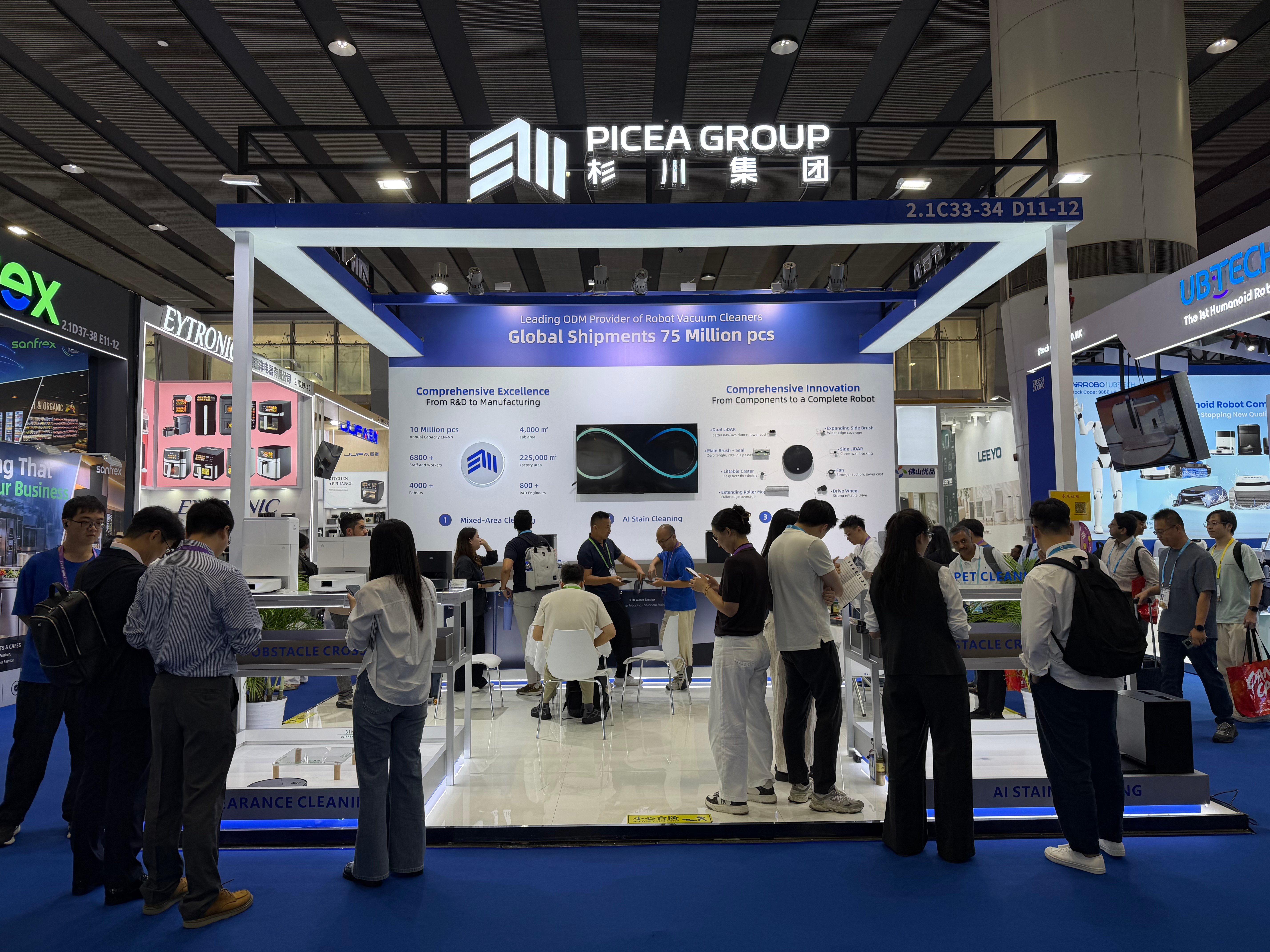
At the 140th Canton Fair in Guangzhou, PICEA Robotics presented its latest robot vacuum developments, including the new X10 Pro featuring freshwater roller mopping technology.
The X10 Pro reflects PICEA's continued focus on advancing robotic floor-cleaning solutions.
Rather than treating mopping as an isolated feature, PICEA approaches cleaning technology through system-level product development.
A freshwater roller mopping platform requires coordinated engineering across multiple areas:
Mechanical and roller structure design
Fresh-water distribution and wastewater management
Motor and motion control
Navigation and obstacle avoidance
Cleaning algorithms
Docking station integration
Reliability and durability validation
These systems must work together to deliver reliable cleaning performance in real household environments.
For ODM projects, this engineering integration is especially important because product requirements often vary according to market positioning, consumer preferences and brand strategies.
For established regional brands, differentiation is becoming increasingly important in a competitive robot vacuum market.
Higher suction power and increasingly advanced navigation are valuable, but these features alone may not create a distinctive consumer experience.
Mopping technology offers another opportunity to develop meaningful product differentiation.
When evaluating a freshwater roller platform, brands should consider not only cleaning performance but also system reliability, maintenance requirements, manufacturing complexity and long-term product costs.
A capable ODM partner should therefore support the complete development process rather than simply offer a finished product with predefined specifications.
At PICEA Robotics, we work with established brands on complete robot vacuum ODM projects, covering product definition, engineering development, testing, validation and mass production.
Our goal is to help brand partners translate market requirements into scalable robotic cleaning solutions.
Freshwater roller mopping is becoming an increasingly important technology direction in premium robotic floor cleaning.
However, its future will depend on continued improvements in cleaning performance, water management, durability, system efficiency and manufacturing cost.
For brands developing their next product generation, understanding these technologies is an important step toward creating competitive robot vacuum platforms.
At PICEA Robotics, we continue to explore advanced cleaning architectures and integrated ODM solutions to support the evolving needs of global and regional brands.
Planning your next robot vacuum project?
Discuss Your Robot Vacuum Project with the PICEA ODM team and explore next-generation cleaning solutions for your brand.
2026/11/06
Planning a robot vacuum launch? PICEA Robotics covers six key decisions on positioning, user experience, costs, ODM development, compliance, and support.
2026/10/23
Explore PICEA Robotics at the 140th Canton Fair 2026, featuring the latest robot vacuum technologies, freshwater roller mopping solutions, customer meetings and ODM project discussions.
2026/10/09
Learn what established brands should evaluate when choosing a robot vacuum ODM partner, from R&D and testing to manufacturing, supply chain and long-term product development.



